
FEAR
"Were you scared?" Out of the blue the words popped up on the lower right side of my computer screen in the tiny Facebook Messenger box. Perplexed I asked about what. It had been storming all evening, so I thought maybe I had missed some sort of tornado warning or something while I was not on social media. Then came the response that I had not anticipated. "The future, your health. I feel so scared and alone." My heart broke right then and there for my dear, sweet friend and sufferer of TBM.
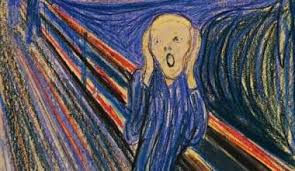
To answer the question, yes, I am scared a lot. In fact, I'm scared a lot more than I let on, but that's how I operate. I push the fear down until it refuses to stay put and burst to the surface so fast that my world spins on its axis. It's then that I have to give in to it and let it wash over me like some cold dense fog that sinks deep into my bones. It's then I have to sit with it, letting it sink in and take a firm hold. It's grip wrapping around my heart, squeezing so tightly that my normally strong heart beats faster and faster until I hear the woosh of the rushing blood in my ears and feel weakened in the knees. The fog of fear continues unleashing its coldness, making its way from the very center of my body, the pit of my stomach, slowly creeping into my lungs and once again squeezing. Squeezing the very breath ever so slowly out of my already compromised airways. My breathing becomes labored, my head spinning, my body shaking. No matter what I do, how much I try to slow the coldness from penetrating any further into my body, how many times I tell my brain to slow down because it was going to be OK, and tell myself to just breathe, it will not slow stop. I'm lost in that moment to the cold fog of fear.
I tried reassuring my friend that they were not alone, no matter how much she felt like it

in the moment. We have an entire online community of people who KNOW exactly what we are dealing with every single day. We can turn to them with our fears and frustrations and most importantly for support. Our online support groups have been the best thing to come out of social media ever - at least for me anyway! I tried easing my friend's fear, even if only a little. I'm not so sure I did such a good job. I then contacted another TBMer and asked them about their fears. They thought it was funny that I asked that question because they had been dealing with their own fears recently. This TBMer has the ultimate fear of being dying, being taken away from her family way too soon. You see, when dealing with tracheobronchomalacia there's so much uncertainty, about everything in life, that one can't help but experience an all encompassing fear somewhere along the way. We are human after all and fear is a natural and normal reaction.

So what is fear anyway? According to Google's Dictionary the noun form of fear is, "an unpleasant emotion caused by the belief that someone or something is dangerous, likely to cause pain, or a threat." But fear can also be a verb, defined as "be afraid of (someone or something) as likely to be dangerous, painful, or threatening." I believe most of us with a chronic, and more maybe more importantly, degenerative disease, experience fear in the verb form.
Psychology Today says that fear is a necessary reaction as it allows humans to protect themselves in life and death situations. It an be traced all the way back through human evolution and is credited for saving many lives. According to Lisa Fritscher, author of the article "The Psychology Behind Fear," fear is both biochemical and emotional, with the biochemical response being universal and the emotional response being directly linked to the individual experiencing the fear. The biochemical, or physical, response to fear typically manifests in such symptoms as sweating, increased blood pressure and heart rate. The "fight or flight" response, the body's natural inclination to fight or run, tends to be triggered automatically and is something that everyone, no matter their background or physical make up, experiences (Fritscher, 2019).
As for the emotional response, it is completely dependent on the the individual. People can experience fear of something as small as missing an appointment, being afraid of flying, or as major as losing control or losing one's life. Fritscher asserts there's no scientific evidence to prove why some people fear one thing over another, which is what makes fear so complicated - and well, scary.
By the way while I'm giving you definitions, some of you may wonder why I choose to use the word degenerative rather than progressive, which is the term most often associated with TBM. I choose to use degenerative, because for me it's a far more accurate description of what actually happens within my airways and potentially lungs in the future. While progressive is forward movement of some sort, I've always associated progress as being a positive thing. There is nothing positive about the way TBM ravages one's airways, causing them to become so weakened that they ultimately refuse to stay open. The cartilage degenerates, not progresses in healing and becoming more firm so that it can support itself, staying open wide enough to allow a fluid flow of oxygen.
Now back to our discussion of fear. Several acronyms are derived from the word fear. Perhaps my favorite being the False Evidence Appearing Real. FEAR. Indeed. I turn to this acronym when the superficial stresses of life turn on within my brain, running around and around and around. I find it to be reassuring, reminding me that most of the time the things of this world that induce fear are false. It reminds me I can control or at least reduce these fears through mental and physical exercises - or a real good cry! However, there are fears in this world that are very real and not so easily calmed.

Two other acronyms were brought to my attention while I was in the middle of writing the blog post. They are Forget Everything and Run OR Face Everything and Rise. I LOVE this. The person who posted these on their social media page had no idea I was actually writing about fear and how perfectly they would fit with what I wanted to tell you. Fear is real, no matter how we choose to categorize it. It can be paralizing, stifling our ability to behave rationally, but then again when you have an illness such as TBM and cannot breathe what is rational behavior? Nonetheless, we can run from our fears or we can rise up and face them head not. We can choose not let our fear rule our lives no matter what we are dealing with or how many curve balls we've been thrown. I won't get in to ways to handle you fears as that may be different for all of us and I'm already being pretty long winded with this post. However, if you'd like some suggestions feel free to contact me and I'll put some things together for you. (Thank you to the person who posted these acronyms, they know who they are!)

People with a chronic illness have fear. Add in the degenerative/progressive nature of some diseases and the fear can become crippling in its cold darkness. If they tell you they do not then they are either lying to you or fooling themselves, not having accepted the reality of what they are facing. As for me I readily admit that I live with fear. Having TBM is one of, if not the scariest things I've ever come up against in my entire life. Thankfully fear does not rear its ugly head in my life every day. Nonetheless, it's there, ready and waiting to jump in and take over my body as I described above. I think my fear hides, lurking under the surface, because my TBM and the comorbidities that often come with it are not as critical as so many other of my dear TBMers. As badly as I feel some days, I know that I am blessed to be where I am physically when compared to them and where their diseases have taken them thus far.
What fears do we TBMers face? Or perhaps the better question is what fears do we not face? There are so many unknowns that come along with TBM simply from the fact that there's so much unknown about this insidious disease. So let's start at the beginning (Please keep in my this is from the perspective of my own experience). TBM is so rare and unknown among most of the general medical community that actually getting to a diagnosis could take years. Folks, I'm not kidding about that. I firmly believe that God brought me to Colorado to find National Jewish Hospital, the nation's leading respiratory hospital, in order to eventually be diagnoses with TBM. Even with being treated at NJ tracheobronchomalacia was not at the forefront of their minds and it took approximately eight months to be diagnosed. I even exasperated the first pulmonologist I worked with to the point that I could feel her giving up on me and NJ's mantra is that they never give up. Trust me when I tell you it was not so reassuring to feel her exasperation when I knew something was not right and I could not breathe.

The fear that comes with not being able to breathe is about as terrifying as it can get, especially when you do not know why you cannot breathe. I've told you in previous posts about the overwhelming anxiety that invades my brain on the days that full collapse occurred and all I knew was that something was seriously wrong with me. I knew my oxygen levels were fine, but I felt like something was slowly squeezing the life giving air from my body. I would begin to shake, my chest became increasingly tighter, and tears filled my eyes. My brain raced, screaming as loud as it could that SOMETHING WAS WRONG.
Fear, along with major frustration, set in when I turned to medical professionals to help me and was told time and time again that I had oxygen and my lungs sounded clear so they didn't really know how to treat me or what I wanted them to do. Even more fear set in as upon subsequent ER visits, and there were a lot of ER visits, I was increasingly treated as someone who was a drug seeker and not believed that I could not breathe. The worst fear came when I was told by one ER doctor, who had the most amazing bedside manner ever, that I was not going to die that night and to go home and call National Jewish from now on when I felt like this. As bad as this experience was there are many more just like it with the worst part being that this is standard treatment by ER physicians and many general practitioners of patients who are in the throws of TBM. This inexplicable treatment causes a true fear and an all around dislike/distrust of medical professionals, the ones we need the most, by TBMers, so much so that we end up avoiding the ER until the suffocation feeling is so bad (and very real as our bodies are not getting oxygen down into our lungs) that we have no other choice but to go.

For the record, there's never a George Clooney or Dr. McDreamy waiting for me when I do determine I have no other choice but to go to the Er! They don't rush me in and instantaneously come to some super, amazing off the wall diagnosis that so easily roles of the tip of the way too handsome doctor's tongue. The wait is long, there are test to be run and results to be waited on. There are IVs to be inserted and fluids to be ingested. There are whispers of "She said she has tracheobronchomalacia. I'm not really sure what to do with her" to be overheard. There are feelings of fear to be had as no one takes me seriously or knows how to treat me. Lastly, after hours and hours of waiting, there's being sent home with little to nothing being done for me. And that my friends is why most of us with TBM are fearful of going to the ER. If only Mr. Clooney were there we'd go every single time; no doubt about it!
When I was told I had TBM I was so relieve to finally have an answer that I honestly did not think to be scared about what exactly that meant to my health or my future.

Diagnosis had been a long time coming and I was so consumed with just trying to figure out what the hell this thing was that had ruined my airways and made just walking the ten feet or so from my living room to the kitchen a nearly impossible task that usually ended with a painful fit of coughing and gasping for air. For hours on end I researched everywhere I could think to look for information on TBM but finding very, very little information. Ultimately I found bits and pieces of information that allowed me to piece together a small view of what TBM was and what life with TBM could be like. I relied on the ever optimistic views of my medical team who repeatedly said that after the big remodel of my airways (aka tracheobronchoplasty - or the bandaid surgery) I would be able to go on and live a relatively normal and productive life.
It wasn't until well after the big remodel when I was not getting better that the true fear settled in. By no means was my life was returning to normal as my medical team had promised. I was sick all of the time. I continued fighting for breath. I continued putting off the inevitable trips to the ER as long as I could. I continued to fight the fear that was waiting to take over my life. To be honest, fighting the fear was actually secondary to fighting to breathe during this time, but it was there. I feared that this was my new normal, that I would always be this sick, having days/weeks on end of barely being able to lift my head or get out of bed. I feared all of the unknowns of TBM and what other illnesses or comorbidities (there as SO many) may come with it. I feared not being able to support myself financially (more on that to come). I feared no longer being able to live on my own and being dependent on others for my most basic needs, while at the same time I feared being alone. I feared not being able to work. I feared losing friendships, which had already happened to some extent. I feared losing my life. I feared.
These fears are not unique to me. Everyone with TBM has the exact same fears as mine and probably more. Why do I say this? While going through the diagnosis process National Jewish is very thorough, testing for some pretty horrific sounding diseases including cardiac diseases where a small hole was found in my heart - nothing serious or life-threatening. During this process I had time to think about my life and all that I've been fortunate enough to accomplish and experience. I've achieved the highest level of education that one can achieve, belonging to a fairly exclusive club of Ph.Ds. I worked for many years in a profession that I was passionate about and truly loved; and I still get to educate people just in a different settings now I have been blessed to have been able to travel to some of the most amazing places around the world and meet incredible people in those places. I have an amazing family and friends who are family. I've loved and been loved. But perhaps most importantly, I am a Christian and know a peace of mind that comes from having a love like no other in my life. I've lived a very good life. I am a very blessed person and know that if my life were to end way sooner than what one would expect that I have nothing to fear.

However, the fear my fellow TBMers express most is the fear of leaving their husbands, children, and grandchildren too soon; of leaving them alone. That fear is all too real and I know at times can be nothing less than petrifying for them. While I do have a wonderful family, I do not have a husband or children to leave behind so prayer and appreciating every single minute that you have to spend with them is all I know to offer to help with that fear. There's also hope. It seems as though daily there is some new finding being reported about TBM. There are new surgical techniques, new stents, more information being made available. We may not have a cure yet, but we have hope for better bandaids and for a better future with breathing easily is not just a fantasy or a long forgotten memory.
Fear impacts our loved ones as well, maybe more than we even realize. It wasn't until this summer that I became aware of just how much some members of my tightly knit family were impacted my my illness. Don't get me wrong, I've always known how much the loved me and worried about me, especially when things were really bad. I've also always known how impacted my parents, especially my mom, have been by this lovely little diseases I've acquired. She worries constantly, but then again she's always been a worrier who often created things to worry about as we were growing up. So now maybe she should thank me for actually giving her something to worry about! :)
I'm not sure what has been different, but this summer it came to light how much my nephews and nieces worry about me. After my last surgery in May my youngest nephew started asking not only me but my mom tons of questions about what my future entailed, what would happen if this surgery didn't work and I didn't get better. He worried every time I mentioned I might try to go run an errand to do something to get out of the house. He worried about me living alone and not having someone close if something were to go wrong. My nieces have also been much more vocal expressing their worry this summer. My oldest niece, who is 17 and always avoids discussing anything medical related due to a squeamish stomach she inherited from her dad, conjured up the nerve to ask a few questions. She only wanted the most basic description as possible of what was happening to me. Trust me folks that's HUGE for her and let me know how much she loves me and worries as well. The same is true for my youngest niece, who is 15. She actually voiced how much my disease scared her on my lasts visit back to Missouri. I was struggling a lot that day to catch my breath and was pretty weak, both of which cause me to shake fairly heavily. I walked up to her in the kitchen, gave her a quick hug and showed her how much I was shaking. She quickly turned her head away saying, "I don't want to see that. It scares me Aunt Shonna."
Their worries for me hurt my heart almost as much as the worst emotional pain I've

ever experienced upon learning that I could not have children. I know how much they love me, but I never knew they thought so much about my health issues. I mean after all they are all so young and full of life. They are all smart, beautiful and good kids They should be out living their lives to the fullest. I never in a million years thought I'd ever, ever, ever be in a position where I hurt any of them or made them worry for me. They too have fear. It goes around in abundance when a loved one becomes chronically ill with a degenerative disease.
Fear is something we all live with, no matter who we are or what you have going on in your life. It is not exclusive to people with chronic illnesses. It is something that can be completely overwhelming and paralyzing in it's dark coldness. The good news is that with time, patience, and some hard work it can be overcome or at least dealt with and put into proper perspective so that we can function within it. I pray that my dear TBM friends are feeling a little better now and the fear living within them has quieted some. Fear has a place in our lives; it just shouldn't overtake our lives. We are all stronger than we give ourselves credit for being and that, along with our loved ones, and faith are what we should hold on to in our greatest times of fear.
I know this wasn't my normal witty bantering blog post, but this was a pretty somber subject matter and I felt as though it needed a bit more of my serious side. My dear friends' fear and pain led me to write this post and I hope that they are able to find some comfort and reassurance in it. I hope that for you as well. As always thank you for taking the time to read my blog and taking part in my journey. Blessings of grace and mercy to you all.
Shonna
13995456_10153997362748068_8974314951280 Tilman bw 14102795_10153997381898068_6443114599338
Sources:
1. https://www.google.com/search?
q=fear&oq=fear&aqs=chrome..69i57j0l5.738j0j9&sourceid=chrome&ie=UTF-8
2. Fritscher, Lisa. (2019, June 17). "The Psychology Behind
Fear." https://www.verywellmind.com/the-psychology-of-fear-2671696
2. https://www.psychologytoday.com/us/basics/fear
Comments